The postponement of the vote on the “Auto Package” by the Transport Committee of the European Parliament, announced on October 2, 2026, reshuffles the cards for the entire sector. Between Franco-German negotiations on post-2035 emission rules, the blockage of Tesla FSD approval, and the dynamics of the French electric market, the automotive news at the beginning of October warrants a technical reading.
Tesla FSD Approval in Europe: A Timeline Slipping to December 2026
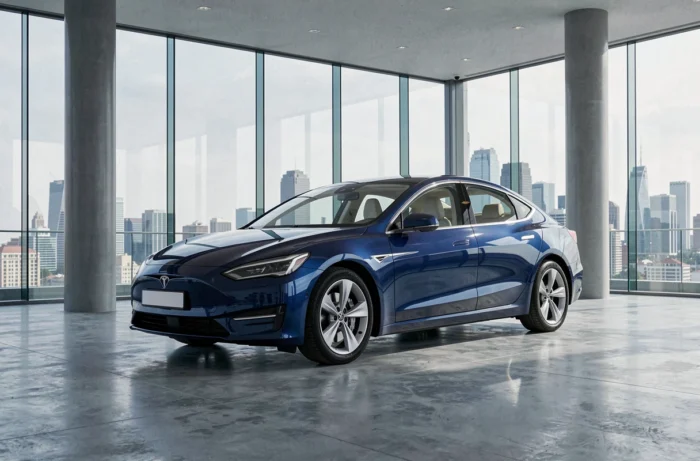
The Tesla FSD Supervised system is not an autonomous driving solution without supervision. The driver remains legally responsible and must maintain constant vigilance. Seven member states have recognized the authorization granted by the Netherlands, but four major markets are still missing.
France, Germany, Italy, and Spain have not yet adopted this recognition. A European vote is not expected before December 2026, according to electrive.com. This delay is significant: it postpones any meaningful commercial deployment in the continent’s top four markets.
The blockage is less about a technical disagreement and more about regulatory divergences regarding driver responsibility and the conditions for activating the system. The news published by Rognac Auto allows for tracking these regulatory developments over the weeks, with a focus on the practical consequences for motorists.
For industry professionals, this situation creates a temporary competitive asymmetry between European countries. Fleets operating in the Netherlands or the seven signatory states have access to advanced driver assistance features that their French or German counterparts cannot utilize.

European Post-2035 Emission Rules: The Postponement of the Vote and the Paris-Berlin Axis
The Transport Committee of the European Parliament postponed the vote on the “Auto Package” on October 2, 2026. This text was supposed to lay the groundwork for revising emission standards after the 2035 deadline. The postponement brings the file into a political phase where each member state defends its industrial sector.
The Franco-German axis crystallizes tensions. Berlin pushes for more flexibility in favor of thermal engines running on low-carbon fuels (e-fuels). Paris, on the other hand, insists on European content requirements to condition public aid and public procurement markets.
This divergence does not concern the climate goal itself, but rather the industrial means to achieve it. A bilateral agreement between France and Germany would not directly change European legislation, but it would strongly influence negotiations in the Council.
European Content and Batteries: The Cost of Sovereignty
The arbitration is delicate: protecting European battery production increases vehicle costs in the short term, but reduces dependence on Asian imports.
European manufacturers find themselves caught between two constraints. On one side, strict emission targets that require accelerating electrification. On the other, origin rules that increase the cost of strategic components.
- Berlin defends e-fuels as a transitional solution for existing thermal engines, which would extend the profitability of certain German production lines
- Paris conditions aid on a European content rate, favoring gigafactories located on its territory
- Central European countries, suppliers of thermal subassemblies, fear a transition that is too rapid without sufficient industrial reconversion
French Electric Market: Confirmed Acceleration on the Ground
The French electric vehicle market is progressing strongly. Registrations of new electric vehicles continue to rise, driven by the expansion of the offer below the €25,000 mark and the growing network of charging stations.
The market share of electric vehicles in France continues to climb, and this trend is also confirmed outside major metropolitan areas.
Ecological Bonus: A Likely Tightening of Criteria
France is considering tightening the rules for the bonus for electric cars. The environmental score, which already penalizes vehicles produced outside Europe (notably in China), could be strengthened. This measure aims to align trade policy with industrial policy.
For buyers, this means that some models currently eligible for the bonus could be excluded in the coming months. Models assembled in Europe with European batteries would logically be favored.
Paris Motor Show 2026: What Manufacturer Announcements Reveal
The Paris Motor Show 2026 focuses on several product announcements. Peugeot is pushing its e-208 GTi in the electric sporty city car segment, and Volkswagen is capitalizing on the launch of the ID.Polo.
Two underlying signals emerge:
- The segment of electric city cars under €25,000 is becoming the new battleground, with the Citroën e-C3, the restyled Dacia Spring, and the Volkswagen ID.Polo
- Electric sporty versions (Peugeot e-208 GTi) seek to prove that performance is not reserved for thermal engines, even if charging times remain a documented weak point
The Paris Motor Show remains the best indicator of strategic orientations for 18-24 months. The models presented this year will enter dealerships between late 2026 and mid-2027, with pricing still likely to evolve based on European decisions on the bonus and emission standards.
Autumn 2026 is marked by the convergence of these regulatory, industrial, and commercial files. The postponed vote on the “Auto Package,” Franco-German negotiations, and the tightening of the French bonus outline a shifting framework. Purchasing choices as well as fleet strategies will benefit from incorporating these parameters before they crystallize into legislation.