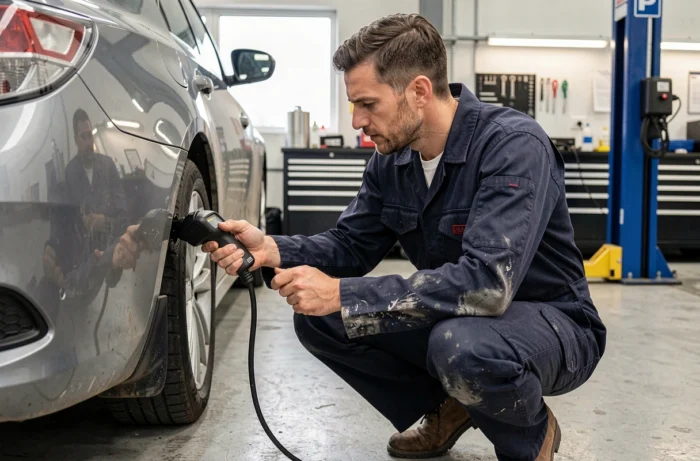
The automotive diagnosis today relies on a combination of electronic protocols, data access rights, and security constraints that vary depending on the type of engine. Comparing an OBD reader to a manufacturer interface is no longer sufficient: the very scope of what can be diagnosed depends on the regulatory framework and the type of vehicle. This article measures the gaps between tool categories, methods suited for recent vehicles, and the obligations governing access to diagnostic data.
Access to diagnostic data: what the European Data Act changes
Since September 12, 2025, the European Data Act allows the user of a connected product, including a car, to obtain the data generated by their vehicle and to request its transmission to a third party. An independent repairer can therefore receive usage data streams that the simple OBD port did not provide.
This evolution changes the game for workshops outside the manufacturer’s network. Until now, certain information remained locked behind proprietary interfaces. The Data Act opens a right to portability that, in practice, allows for remote diagnostics on parameters that were previously inaccessible without a manufacturer tool.
The European framework also mandates access to the data necessary for calibrating advanced driver assistance systems (ADAS) and diagnosing traction batteries. This means that a workshop equipped with a compatible interface can intervene on much broader scopes than just the powertrain, provided they have the associated technical skills. Resources like diagnostique-automobile.fr allow tracking these regulatory developments and their implications for professionals and individuals.
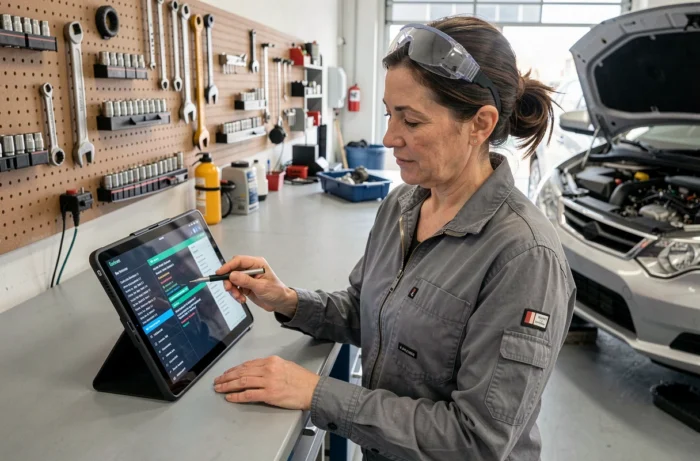
Automotive diagnostic tools: comparative table by category
The choice of a tool depends on the diagnostic scope aimed at and the user’s level of expertise. Three categories stand out clearly.
| Category | Covered Scope | Main Limitations | Typical User |
|---|---|---|---|
| Basic OBD Reader | Engine fault codes, clearing warning lights | No access to ADAS systems, high voltage batteries, advanced multiplexing | Individual, occasional use |
| Multi-brand Interface (professional tester type) | Engine, transmission, ABS, airbags, air conditioning, some ADAS | Variable coverage depending on brands and models, paid updates | Independent workshop |
| Manufacturer Tool (OEM interface) | All systems, reprogramming, ADAS calibration, high voltage battery diagnostics | High cost, single brand, specific training required | Dealer, authorized workshop |
The coverage gap between a basic OBD reader and a manufacturer tool is considerable. A basic reader only reads a fraction of the fault codes present in a recent vehicle. The controllers related to ADAS, high voltage battery management, or the CAN/LIN network remain silent without an appropriate interface.
Multi-brand Interfaces: the compromise to evaluate
Multi-brand testers cover an intermediate spectrum. Their main advantage lies in versatility: a single tool for multiple manufacturers. However, the depth of data access varies depending on the brand and year of the vehicle.
On a model less than three years old equipped with numerous ADAS, a multi-brand interface may miss codes related to camera or radar recalibration. This discrepancy pushes some independent workshops to combine a multi-brand tester for routine diagnostics and occasional access to manufacturer portals for specific interventions.
Diagnosis of electric vehicles: high voltage safety and qualifications
The diagnosis of an electric or hybrid vehicle is not limited to plugging an interface into the OBD port. The high voltage chain (several hundred volts) requires a lockout procedure before any intervention on the traction circuit.
- The French standard NF C 18-550 governs the qualification levels applicable to electric and hybrid vehicles, defining specific roles according to the scope of work (measurement, intervention, live work).
- A traction battery diagnosis requires measuring instruments suitable for high voltage, distinct from the standard multimeter used in 12 V.
- Reading fault codes on the BMS (Battery Management System) requires an interface capable of communicating with this specific controller, often absent from entry-level OBD readers.
Without proper qualification, intervening on the high voltage chain exposes one to the risk of electrocution. This point radically differentiates electric/hybrid diagnostics from traditional thermal diagnostics, where the voltages involved remain low.
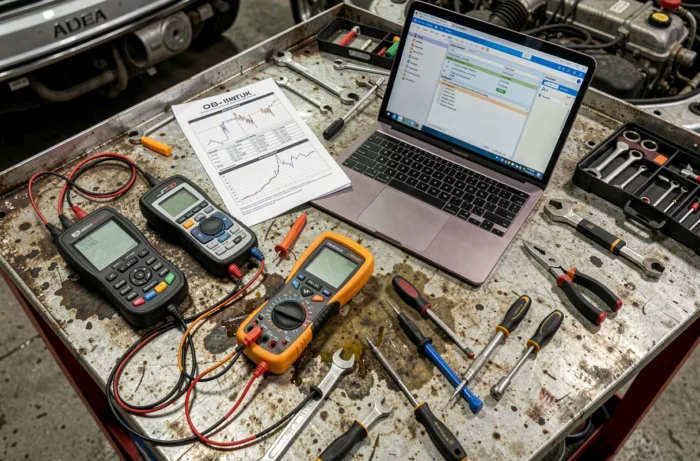
Recurring fault codes: analysis method beyond raw reading
A fault code that reappears after being cleared rarely indicates a failure of the designated component. The tool indicates a direction, not a conclusion. A P0420 code (catalytic efficiency insufficient) may result from an aging lambda sensor, an upstream exhaust leak, or a richness issue related to an injector.
The method involves cross-referencing multiple data sources:
- Real-time data (sensor values, pressures, temperatures) compared to the manufacturer’s reference values.
- Frozen data (freeze frame) recorded at the time the fault appeared, indicating the driving conditions.
- Direct electrical measurements (voltage, resistance, oscilloscope signal) on the suspected component and its wiring.
Replacing a sensor without checking its circuit is the leading cause of unnecessary expenses in automotive diagnostics. A broken wire or an oxidized connector produces the same fault code as a faulty sensor, for a very different repair cost.
CAN and LIN multiplexing: when the network obscures the trail
On recent vehicles, controllers communicate via CAN or LIN buses. A fault on the network itself (damaged bus wire, missing termination resistor) can generate fault codes in multiple controllers simultaneously. The appearance of multiple codes with no apparent link between them points to a network problem rather than individual component failures.
Automotive diagnostics now relies as much on the right to access data as on technical expertise. The convergence between the Data Act, high voltage safety requirements, and the complexity of embedded networks redefines what it means to “perform a diagnosis”: the tool alone is no longer sufficient; it is the analysis method that makes the difference between blind replacement and targeted repair.