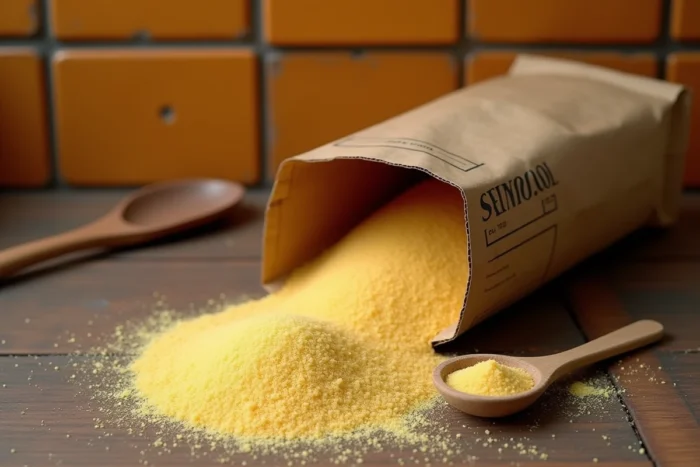
Durum wheat semolina almost always displays a minimum durability date (MDD), rather than a use-by date (UBD). This distinction radically changes the risk assessment once the date has passed. The question remains what is really at stake in a package of semolina forgotten at the back of the cupboard, between invisible mycotoxins, discreet insects, and loss of nutritional quality.
MDD and UBD on semolina: two mentions, two levels of risk
The confusion between MDD and UBD remains the primary source of waste for dry products. For semolina, the difference has direct consequences on the decision to throw away or cook.
| Criteria | MDD (“best before”) | UBD (“use by”) |
|---|---|---|
| Type of indication | Organoleptic quality (taste, texture) | Strict food safety |
| Products concerned | Dry semolina, pasta, rice, flour | Fresh meats, dairy products, refrigerated meals |
| Consumption after the date | Possible if the product is intact | Prohibited and potentially dangerous |
| Legal obligation to withdraw | No | Yes |
| Main risk after expiration | Alteration of taste, rancidity | Bacterial proliferation, poisoning |
Dry semolina falls under the MDD. Exceeding this date does not pose a danger in itself, provided that storage has been correct and the packaging remains intact. The DREETS Nouvelle-Aquitaine document confirms this regulatory distinction between MDD and UBD.
One might wonder if we can consume expired semolina according to Pharmanco when hesitating in front of a package whose date is several months past. The answer depends less on the calendar than on the actual condition of the product.

Mycotoxins and invisible mold: the real danger of expired semolina
Competitors often mention bacteria and salmonella. However, the most underestimated risk for a dry product like semolina is of a different order: mycotoxins.
Some molds produce mycotoxins that are invisible to the naked eye. Removing the visibly moldy part is not enough, as the toxins may have migrated throughout the product. This information comes from an article by Allodocteurs dedicated to damaged foods and mycotoxins.
Unlike a bacterium that develops in a humid environment, a mold can colonize semolina even in a relatively dry environment if the packaging has been opened or damaged. Wheat semolina, similar to flour in its structure, easily absorbs odors and contaminants from the surrounding environment. Food authorities (notably the Centre for Food Safety in Hong Kong) emphasize that the integrity of the packaging is the decisive criterion, more so than the date itself.
Raw semolina and cooked semolina: a distinction not to be overlooked
Dry semolina, in a closed package and stored in a dry place, retains its properties well beyond the MDD. In contrast, already hydrated or cooked semolina becomes a favorable environment for bacterial proliferation within hours at room temperature.
Cooked semolina left out of the refrigerator presents a risk of food poisoning unrelated to the MDD printed on the original package. The danger then comes from common bacteria, not mycotoxins.
Vulnerable individuals and expired semolina: a lower tolerance threshold
Not all populations react the same way to low-intensity contamination. Pregnant women, young children, the elderly, and immunocompromised individuals have a significantly higher risk of complications, even when visible signs of alteration remain low.
For these groups, the recommendation is clear: avoid any questionable semolina beyond its date, especially if the packaging has been opened. A low-dose mycotoxin, with no perceptible effect on a healthy adult, can cause digestive issues or more serious reactions in a vulnerable person.
Conversely, a healthy adult without particular vulnerabilities who consumes dry semolina that is a few months past its date, stored under good conditions, only faces a very limited risk, primarily a change in taste.
Sensory checks before consuming expired semolina
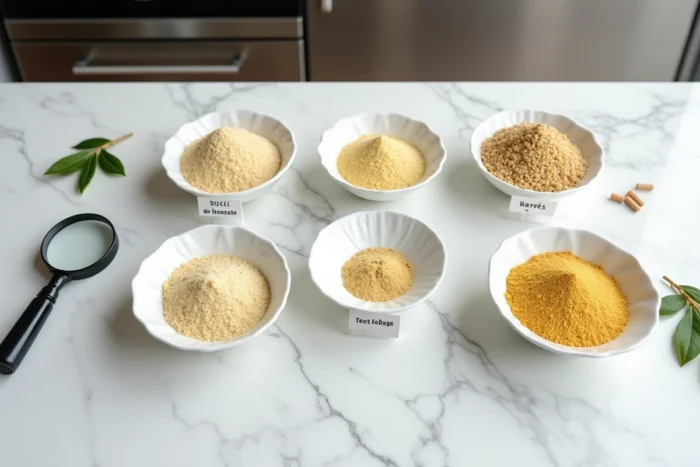
Rather than a generic checklist, here are the points that truly allow one to decide between throwing away and cooking.
- Integrity of the packaging: a tear, an insect hole, or a poorly sealed joint invalidates the entire process. If air or moisture has entered, the product is compromised, regardless of the date
- Smell before cooking: healthy semolina is almost odorless. A rancid, sour, or chemical smell (absorption of odors from nearby household products) indicates an alteration that no cooking will correct
- Visual appearance: look for threads, black spots, compact clumps, or insects. Pantry moths often leave fine silky threads between the grains
- Texture: semolina should remain granular and fluid. Hard blocks or sticky powder indicate moisture absorption
- Taste after cooking: if everything seems normal, taste a small amount. A bitter aftertaste or unusual bitterness justifies throwing away the rest
These checks do not detect invisible mycotoxins. They help identify the most common contaminations (visible molds, insects, rancidity), but do not guarantee the total safety of very old semolina.
Storage conditions that truly extend shelf life
The actual shelf life of semolina depends almost entirely on its storage environment.
- Hermetic container (glass jar, food-grade plastic box with a seal): drastically reduces the risk of infestation by moths and absorption of odors
- Cool, dry place, away from direct light: heat and humidity accelerate the rancidity of residual fats from durum wheat
- Separation from household products or strong spices: wheat semolina absorbs odors from the environment, which can render it unfit for consumption without showing any mold
A package of semolina closed with a simple rubber band in a humid cupboard has no margin beyond the MDD. The same product transferred to an airtight jar and stored in a dry place remains usable for much longer.
Expired semolina is not a risky product in the same way as meat or dairy. The packaging and storage environment matter more than the printed date. For vulnerable individuals, doubt always justifies throwing away. For others, the five sensory checks described above are sufficient to make a reasoned decision, keeping in mind that mycotoxins remain undetectable without laboratory analysis.