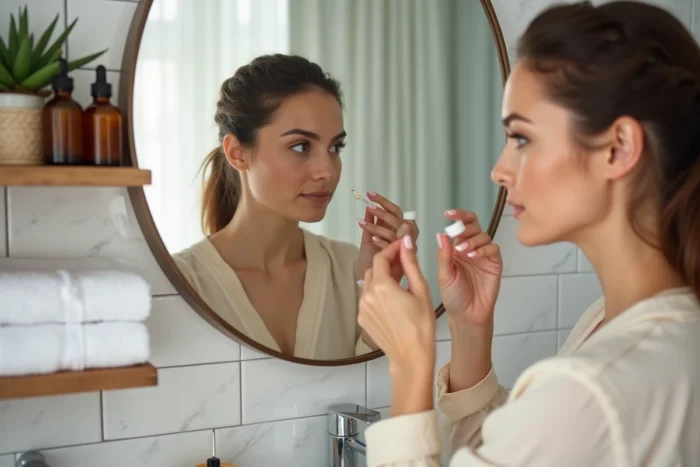
When you open your bathroom cabinet and find yourself facing twelve bottles, half of which haven’t been used in three months, the question quickly arises: what to keep, what to change, and where to turn for concrete results on the skin and complexion every day?
The trends in cosmetics and beauty that are emerging today no longer adhere to a logic of accumulation. They encourage streamlined routines, formulas that combine multiple functions, and diagnostic tools that tailor treatments to each face.
AI Skin Diagnosis: What It Changes in Choosing Treatments
We often start by choosing a product based on our declared skin type (oily, dry, combination). The problem is that this classification remains fixed while the skin varies according to the season, stress, diet, or environmental pollution.
AI-based skincare diagnostics change this approach. Applications and cameras integrated into smartphones now analyze the texture, redness, pigmentation spots, and degree of dehydration of the face. The result is not a simple labeling but a recommendation for a personalized routine: active ingredients to prioritize, frequency of application, order of steps.
According to the Skin Care Market report by Fortune Business Insights, these AI diagnostics are among the main growth drivers of the global skincare market. They are no longer reserved for major brands: these tools can be found on accessible platforms, including those referenced on cosmetiques-beaute.net, where the recommended formulas adjust to individual analysis.
In practical terms, this means we can stop buying an anti-redness serum “just in case” and precisely target the active ingredient our skin needs at any given moment. Feedback varies on the accuracy of these tools depending on the brands, but the time-saving and reduction of product waste are real for the majority of users.
Hybrid Facial Treatments: When Makeup and Actives Merge
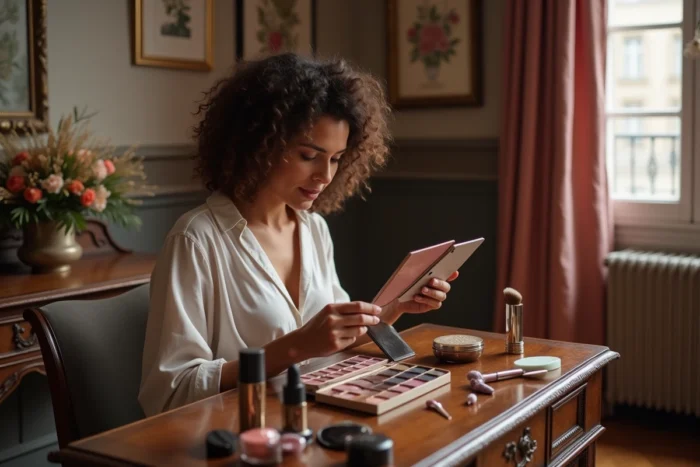
The gesture that best summarizes this trend is that of the rushed morning: applying a single product that hydrates, protects, and evens out the complexion. Hybrid formulas combine makeup and high-efficiency actives in one bottle, and it’s not just a marketing argument.
We’re talking about tinted bases enriched with niacinamide, lipsticks incorporating hyaluronic acid, or compact powders containing a sun filter. The idea is not to replace a complete treatment but to reduce the number of layers applied to the skin without sacrificing protection or care.
How to Spot a True Hybrid Treatment
A hybrid product that lives up to its promises displays its actives with their concentration, not just at the end of the INCI list. Here are the criteria to check before purchase:
- The presence of at least one targeted active (vitamin C, niacinamide, SPF) high up in the ingredient list, not relegated to the end of the formula
- A texture that does not require layering another product to achieve a proper finish on the skin
- Packaging suitable for preserving the active (airless bottle for vitamin C, for example)
- Mention of dermatological tests, not just a claim of “tested under control”
This sorting helps avoid products that claim to be hybrid but contain only a symbolic dose of active ingredient.
Natural Alternatives to Retinol: Anti-Aging Accessible for Sensitive Skin
Retinol remains a reference in anti-aging care, but its irritating effects exclude a significant portion of users, particularly those with reactive, thin skin or prone to rosacea. The current trend is leaning towards plant-based alternatives that aim for the same results (smoothing, radiance, reduction of fine lines) without causing peeling or redness.
Bakuchiol is the most documented of these substitutes. Extracted from the plant Psoralea corylifolia, it acts on the same cellular receptors as retinol but without photosensitization. Therefore, it can be applied morning and night, simplifying the routine.
Other natural actives are gaining ground: biomimetic peptides, certain extracts from adaptogenic mushrooms, and stabilized vitamin C derivatives. The practical approach here is to test only one new active at a time for at least four weeks before judging its effectiveness. Layering three new products at once makes it impossible to evaluate the result.
Minimalist Beauty Routine: The Gestures That Really Matter
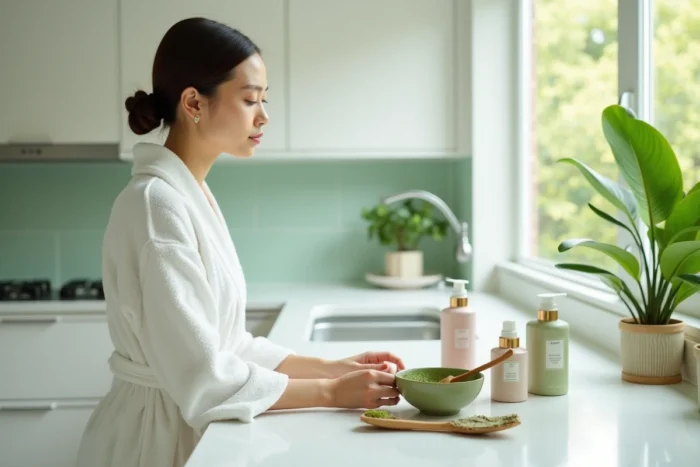
Skin streaming (or skip-care in the Korean style) takes the logic of simplification even further. We go from eight or ten steps to three or four targeted gestures. This is not a passing trend: it is a direct response to the overload of products that ultimately weakens the skin barrier.
An effective daily routine for the face actually consists of these gestures:
- A gentle cleanser suitable for the season (gel in summer, oil or balm in winter)
- A serum concentrated on the main issue (hydration, radiance, anti-aging)
- A daily sun protection, even indoors if screen exposure is prolonged
Reducing the number of products does not mean reducing effectiveness, as long as each formula is chosen with precision. This is where AI diagnostics and the choice of hybrid treatments make perfect sense: fewer bottles, but better targeted.
The real change in routine does not come from buying an additional product. It comes from removing those that do not provide measurable benefits and from regularly observing one’s skin to adjust actives over the months. A beauty routine that works is one that is maintained over time, not one that is abandoned after two weeks because it takes too long.