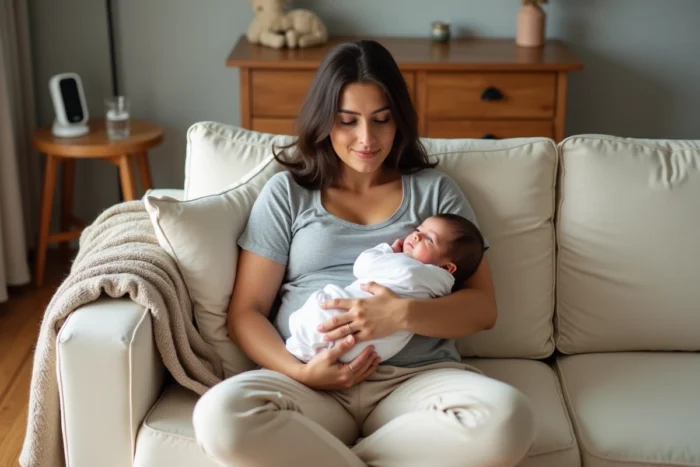
Fragmented sleep, cries that are hard to decode, mental load that sets in from the first weeks: the challenges of young parents are measured as much in accumulated fatigue as in daily decisions. Rather than listing obvious facts, this article compares concrete levers that make a measurable difference in family well-being, from early sharing of care to screen management and recognizing parental burnout.
Second parent leave and care distribution: what recent data shows
Since 2022, Santé publique France and DREES reports have documented a steady increase in the use of paternity leave, particularly among young salaried fathers in the private sector. This evolution changes the organization of the first weeks of life: care and household tasks are shared earlier between both parents.
The effect is not limited to logistics. Shared presence from the return home allows each parent to build their own reference points with the newborn (decoding cries, establishing the first sleep routines) instead of concentrating this burden on a single adult.
For families seeking additional resources on daily parenting, everything you need to know about Vive Mon Bébé gathers useful guidelines for supporting parents from birth.
| Lever | Main Impact | Point of Caution |
|---|---|---|
| Fully taken second parent leave | Early sharing of care, better maternal rest | Plan for night shifts from the first week |
| Shared sleep routines | Reduction of sleep debt for each parent | Adapt the rhythm to the child, not to a theoretical model |
| Postpartum psychological support | Early detection of parental burnout | Hotlines and support groups remain underutilized |
| Screen management before age 3 | Protection of language development and attention | Define rules applicable to adults as well |

Parental burnout and mental health: spotting signals before collapse
Since 2023, several Regional Health Agencies and perinatality structures have reported an increase in consultations for parental distress and postpartum exhaustion. The phenomenon affects both mothers and fathers, and awareness of parental burnout is growing in the medical community.
The problem lies in the gap between recognizing the risk and actual access to resources. Psycom, a public information organization in mental health, reminds us of the existence of hotlines, support groups, and consultations dedicated to parents. However, these resources are rarely mentioned in mainstream content, which focuses on practical organization without addressing the psychological dimension.
Warning signals to take seriously
- Exhaustion that persists despite rest, feeling of emotional emptiness in front of the child, loss of pleasure in daily interactions with the baby.
- Disproportionate irritability over trivial situations (spilled bottle, nighttime crying), associated with a constant feeling of guilt.
- Gradual isolation: refusal to go out, difficulty asking for help, impression that no one can understand the situation.
A parent who identifies several of these signals should contact their doctor or a specialized hotline. Waiting for the situation to worsen complicates care and weakens the bond with the child.
Screens before age 3: a parental framework that protects language development
Updated recommendations in France and Europe converge towards a strict limitation of screens before age 3. Between ages 3 and 5, a precise framework is necessary: limited duration, appropriate content, and the systematic presence of an adult. These recommendations are based on data related to language and attention development in young children.
Internet Matters, which relays these guidelines, emphasizes that many young parents use screens as a respite tool without having access to concrete alternatives. Guilt then replaces information.
Establishing applicable rules
The classic trap is to set theoretical prohibitions that are impossible to maintain. Realistic rules hold better than absolute principles that are never respected. A few functional guidelines:
- No screens during meals or in the hour before bedtime, including for adults (the child imitates what they observe).
- Prioritize moments of verbal exchange: naming objects, commenting on daily actions, reading aloud even for a few minutes a day.
- If a screen is used occasionally, stay next to the child and interact with them about what they see, rather than leaving them alone with the content.

Infant sleep routines: what works according to each family’s rhythm
Sleep remains the number one concern for young parents. The temptation to replicate a single model (fixed schedules, standardized sleep methods) clashes with reality: each infant has their own rhythm that evolves rapidly over the weeks.
The most documented approach is to observe the child’s fatigue signals (rubbing eyes, yawning, restlessness) rather than following a rigid schedule. Establishing a short and repetitive ritual before bedtime (same song, same gesture, same sequence) helps the baby anticipate the transition to sleep.
On the other hand, methods that involve letting an infant cry for long periods without intervention are debated among early childhood professionals. The most sustainable compromise combines reassuring presence and gradual autonomy, by gradually increasing the time between each nighttime intervention.
The burden should not rest on a single parent. Alternating nights, or at least the early and late night awakenings, helps maintain a sufficient level of alertness during the day, which data on second parent leave indirectly confirms.
Supporting an infant daily is not just about accumulating tips. The important levers—early sharing of care, recognizing parental burnout, managing screens, adapting sleep routines—share a common point: they require less perfection than consistency, and less theory than concrete adjustments week after week.