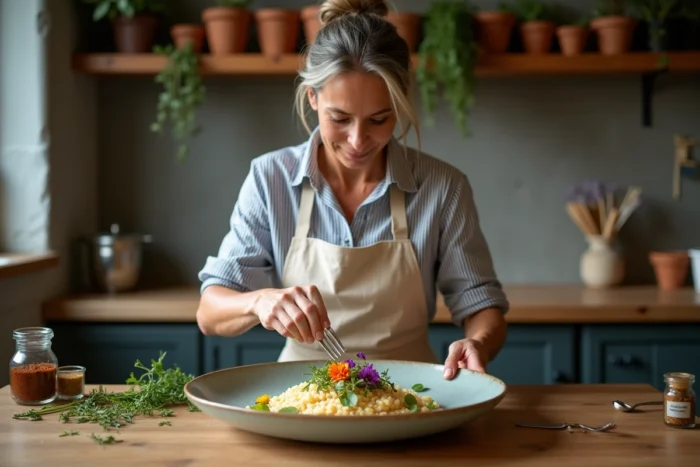
What concrete levers transform an ordinary meal into a memorable plate, without professional equipment or hard-to-find ingredients? Creative cooking relies less on improvisation than on measurable choices: cooking method, flavor pairing, quality of fats, and management of seasonality. Comparing these parameters allows us to identify what creates a real difference in taste and presentation.
Cooking and materials: what changes with the abandonment of PFAS coatings
The European regulation on PFAS (the “forever chemicals”) encourages the gradual replacement of traditional non-stick pans with alternatives made of stainless steel, cast iron, or ceramic. This change in material is not just a health issue: it directly alters everyday cooking techniques.
A stainless steel or cast iron pan requires a longer preheating time and a well-distributed fat. In return, it produces more intense Maillard reactions, resulting in golden crusts, abundant cooking juices, and crispy textures that are hard to achieve on a non-stick surface. Deglazing with wine, vinegar, or broth then becomes a natural gesture to recover these juices and create a sauce in seconds.
To explore other approaches that connect technique and taste pleasure, Gourmandel’s cooking details methods tailored to each type of dish.
| Parameter | Non-stick pan (PFAS) | Cast Iron / Stainless Steel | Ceramic |
|---|---|---|---|
| Maillard Reaction | Low to medium | High | Medium |
| Deglazing possible | Limited (few juices) | Yes, abundant juices | Variable depending on thickness |
| Suitable for quick sauces | No | Yes | Partially |
| Preheating required | Short | Long (cast iron) / Medium (stainless steel) | Medium |
| Material durability | Limited over time | Very long | Medium |
Switching to cast iron or stainless steel requires an adjustment period. However, the sauces obtained through deglazing are incomparable to those made on non-stick surfaces, where juices hardly form.
Seasonality and short circuits: an underestimated lever of creativity
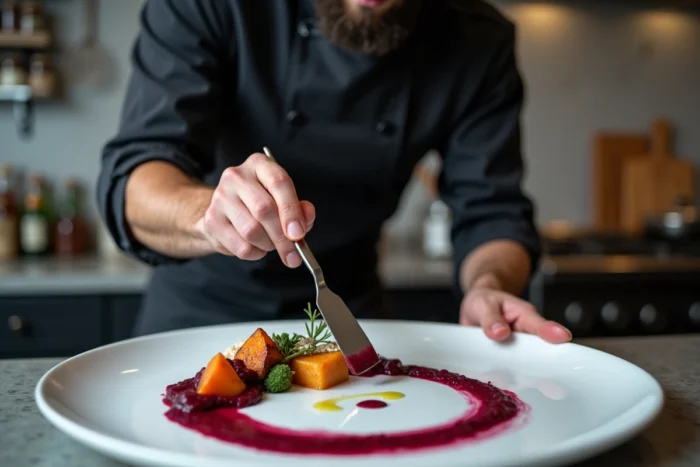
Several recent culinary training programs incorporate creative cooking as a tool for promoting seasonal products and combating food waste. The principle is simple: a vegetable harvested at maturity and consumed within days offers an aromatic concentration that no seasoning can compensate for in an out-of-season product.
Working with a seasonal basket imposes constraints. These constraints are precisely what stimulate creativity. When the choice is limited to five or six available vegetables, unusual combinations emerge out of necessity rather than whim.
- A winter black radish, grated and mixed with a miso vinaigrette, replaces a classic starter with a dish that has both spicy and umami flavors.
- Carrot tops blended with olive oil and sunflower seeds produce an alternative pesto that reduces waste and adds vegetal bitterness to a pasta dish.
- A peak-season zucchini, simply grilled on a hot cast iron with a drizzle of lemon juice, surpasses in taste most elaborate recipes made with an out-of-season imported vegetable.
Seasonality is not a trend. It is a measurable parameter: the concentration of sugars and aromatic compounds in a fruit or vegetable varies significantly depending on whether it is harvested at maturity or after long-distance transport.
Sauces and seasonings: building the depth of a dish
The difference between a “correct” dish and a memorable one often plays out in the last five minutes of preparation. The final seasoning, what chefs call the “finishing touch,” remains the most neglected gesture in home cooking.
Layering flavors
A creative meal does not rely on a single sauce. It involves layering elements that play on different registers: acid, fat, umami, texture. A tomato salad benefits from receiving fruity olive oil (fat), a few drops of balsamic vinegar (sweet-acid), capers (saltiness-bitterness), and a handful of toasted seeds (crunchy texture) simultaneously.
Each addition occupies a distinct taste space. When two elements overlap in the same register, one of them is redundant.
The underestimated role of acid
A squeeze of lemon, a splash of apple cider vinegar, or a few drops of sumac are often enough to awaken a dish that seems bland. Acidity acts as a natural enhancer without adding salt. This is a reflex that professional chefs systematically apply and that home cooking frequently forgets.
Presentation and plating: what works without specific equipment
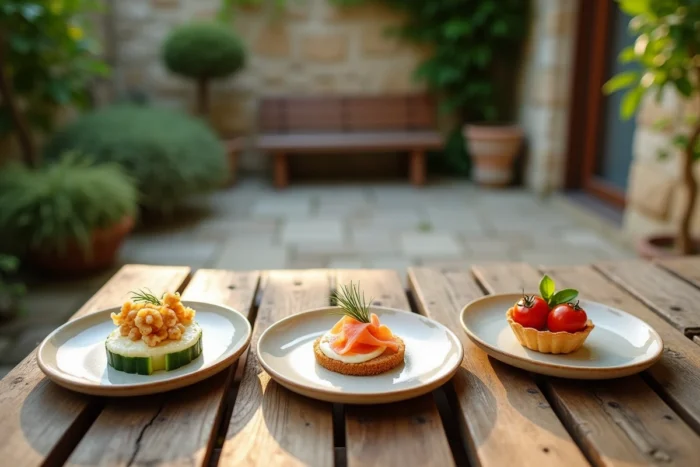
Plating tutorials often show techniques that require tweezers, piping bags, or presentation rings. In practice, three simple principles produce a clean visual result.
- Leave empty space on the plate: a dish occupying half the surface looks neater than a plate filled to the brim.
- Play with heights: slightly stacking elements creates relief and draws the eye to the center of the plate.
- Add a contrasting element last: a fresh herb, a drop of colored oil, or a few seeds are enough to create a visual focal point that gives the impression of elaborate work.
Plating requires neither budget nor equipment. It requires restraint. A dish overloaded with decorative garnishes loses readability for what it gains in color.
Ultimately, creative cooking in everyday life relies on precise technical parameters: the choice of cooking material, the freshness of products, the construction of layered seasonings, and a sober presentation. Each lever taken in isolation produces a modest difference, but their combination radically changes the outcome on the plate.