
A white wall that feels dull, an empty shelf for three months, a living room lacking character: we often start with a specific annoyance before diving into DIY decoration. Making your own decor elements allows you to meet a concrete need while controlling the budget, as long as you choose the right projects. Here are some DIY ideas and inspirations to enhance your interior without falling into the generic catalog.
Create a wellness corner with reclaimed materials
The 2026 decor trends point towards slow living, meaning the creation of spaces dedicated to relaxation in the home: reading nook, meditation zone, seating by a window. We are no longer just talking about hanging a frame, but about building a micro-space that changes the use of a room.
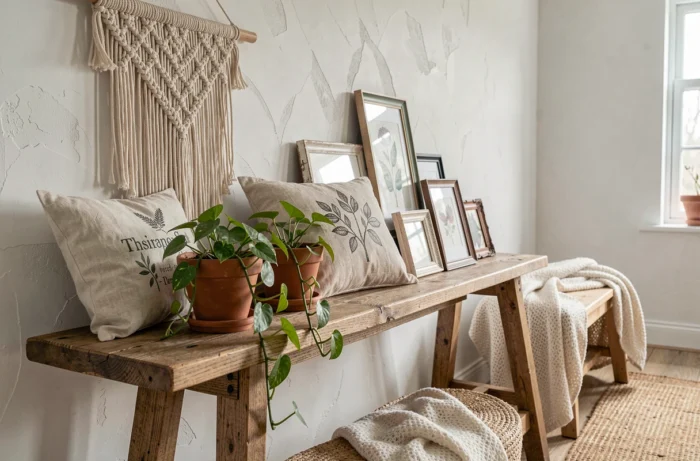
For a reading nook, you can reclaim wooden pallets and sand them down to create a low bench. Add cushions sewn from thrifted fabric, and the seating becomes modular. Lighting is just as important as the furniture: a string of lights fixed along a raw wood shelf is enough to create a cozy atmosphere without drilling into the ceiling.
If you’re looking to explore decor with L’Atelier du Bricolage, you will find concrete ideas for combining reclaimed materials and functional design, particularly around wood and artisanal finishes.
The advantage of this approach by space (rather than by isolated object): you achieve a visible result immediately, even on a near-zero budget. A throw, a wooden crate turned into a side table, a potted plant on the floor – three elements are enough.
Wall DIY: going beyond the classic photo frame
Wall decoration remains the first reflex when wanting to transform an interior. The problem is that most tutorials stop at aligned frames or geometric masking tape. We can go further.
Wooden batten panels
Fixing vertical wooden battens on a wall creates an interior slatted effect. Buy raw battens with a section of 20 x 40 mm, cut them to the desired height, and then fix them with screws or mounting glue.
The result visually structures the room without partitioning the space. You can paint the battens in the same color as the wall for a discreet finish, or choose a strong contrast (natural wood on a dark wall).
Hanging textile art
Macramé has been overused, but weaving on a wooden frame or XXL embroidery on burlap offers a different result. Reclaim an old frame, stretch a linen fabric, and embroider a simple pattern using a stem stitch. This type of wall decor adds texture, something neither a poster nor a mirror can achieve.
Feedback varies on the durability of these textile pieces in humid areas (kitchen, bathroom), so it’s best to prioritize dry living spaces for this type of project.
Reclaimed furniture and customization: what really works
Repainting a thrifted piece of furniture is the classic DIY decor project. We see spectacular transformations circulating, but the reality on the ground is more nuanced. Here’s what makes the difference between a successful makeover and a disappointing result:
- Sanding conditions the entire result. Without proper sanding (grit 120 then 180), the paint adheres poorly and chips within weeks, especially on varnished or melamine wood.
- The choice of primer is more crucial than that of the finishing paint. A multi-surface bonding primer avoids most adhesion problems.
- Drawer handles and knobs radically change the look of a piece of furniture. Replacing basic handles with brass or artisanal ceramic models transforms an ordinary dresser into a character piece for just a few euros.
- For furniture legs (buffets, coffee tables), you can find wooden or metal hairpin legs that screw directly on. An 80s low piece of furniture takes on a mid-century look in ten minutes.

Seasonal decoration without accumulation: Christmas and beyond
DIY Christmas projects flood social media starting in October, but most end up at the bottom of a box by January. To avoid accumulation, we prioritize creations that also serve outside of the holidays.
A wreath made of dried branches and cotton flowers works from November to March. Glass votives painted with Meudon white can be cleaned after the holidays and become vases again. A raw linen table runner, adorned with discreet embroidery, can be used year-round.
This logic of versatile decoration aligns with the underlying trend towards circular economy and second-hand in interiors. We invest time in a reusable object rather than in ten disposable accessories.
Small DIY budget: balancing time and materials
The DIY market is experiencing a downturn, with sales in large DIY stores down several points in 2024 compared to the previous year. For the amateur DIYer, this means more promotions on end-of-line products (paints, hardware, basic tools).
The balance to strike is simple: invest in good basic tools rather than expensive materials. A decent drill/driver, a glue gun, a set of quality brushes, and sandpaper in various grits cover the vast majority of home decor projects.
- Reclaimed wood (pallets, crates, construction scraps) is a great substitute for new wood for shelves, frames, and small accent furniture.
- Glass jars (cans, jars) become vases, visible storage, or hanging lights.
- End-of-roll upholstery fabrics, available in fabric stores or online, allow for custom cushions and curtains at a lower cost.
A successful DIY decor project does not depend on the initial budget, but on preparation: measuring before cutting, testing paint on a sample, checking the sturdiness of a fixture before loading a shelf. These practical reflexes separate a enhanced interior from a rough DIY job.