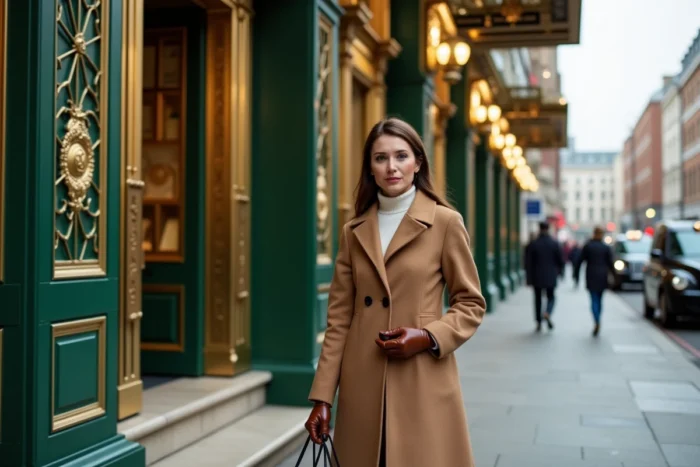
A luxury department store is not just an alignment of prestigious windows. It is a commercial device where each floor, each brand displayed, and each circulation rule responds to a logic of selection and calibrated staging. Harrods in London and the Parisian stores on Boulevard Haussmann or the Left Bank share this ambition, but express it according to very different codes.
Retail media and customer data: the luxury store as a platform
The most discreet transformation of luxury department stores does not concern architecture or collections. It focuses on how these brands monetize their audience to the brands they host.
Harrods relies on its Rewards program and transaction data to offer luxury houses internal advertising targeting. The store no longer just sells products: it also sells access to its customers, their shopping habits, and their preferences. This logic of retail media based on first-party data transforms the department store into an advertising agency, comparable in principle to what digital platforms do.
For a brand like Celine, Givenchy, or Dior, being listed at Harrods means accessing a channel of physical and digital visibility driven by data. The mutual influence relationship between the London store and the Paris fashion scene also plays out in this realm of data and targeting.
An article dedicated to Harrods in Paris on Voyage 2 Rêve details this closeness between the British brand and Parisian elegance.
The Parisian department stores follow a similar trajectory. La Samaritaine, after its reopening, has repositioned its offering around a tighter selection.
In both cases, the central question remains the same: which brands deserve the space, and how to exploit foot traffic to generate value beyond simple sales per square meter.
Access rules and constrained pathways at Harrods
The elegance claimed by Harrods comes with concrete constraints rarely mentioned in tourist guides. The store applies rules of usage that govern visitor behavior, far beyond a simple dress code.
- Large luggage is prohibited inside the store, and no luggage storage is available for visitors, which requires planning ahead for the visit
- On Sunday mornings, Harrods opens in “browsing only” mode: visitors can browse the aisles, but transactions only begin after a certain time slot
- Movement between floors follows a path designed to maximize exposure to brands, with escalators that systematically cross commercial areas
These rules distinguish Harrods from a typical shopping mall. They create a ritualized visiting experience where the time spent in the store itself is a monetization lever. The visitor does not “shop”: they enter a scenographic device that conditions their gaze and their journey.
What this changes for the visitor
For a tourist planning to visit Harrods upon arriving from the airport, the absence of luggage storage represents a real practical obstacle. This seemingly trivial detail reflects a deliberate choice: Harrods selects its audience as much as its brands.
Parisian department stores and luxury venues on the Left Bank
In Paris, the experience of commercial luxury is not concentrated in a single building. It is spread across several hubs, each obeying its own logic of selection.
Boulevard Haussmann remains the primary location associated with Parisian department stores, featuring Galeries Lafayette and Printemps. These stores operate on a concession model where each brand rents a space and manages its staging. The store orchestrates cohabitation, arbitrates strategic locations (ground floor for beauty, upper floors for fashion), and takes a share of each transaction.
Place Vendôme represents an entirely different realm. This location concentrates jewelry houses within a limited perimeter, with a logic of customization and private appointments that diverges from the visitor flow characteristic of a department store. Elegance takes on a more confidential form here.
Fashion, gourmet food, and in-store experience
Parisian department stores have developed their gourmet and fine food sections to compete with the Food Halls model of Harrods. La Samaritaine offers a food selection integrated into its visitor journey. Galeries Lafayette Gourmet operates like a curated market where each chef or artisan is selected based on notoriety and coherence with the store’s positioning.
This convergence between fashion, dining, and grocery reflects a common strategy: to extend the visitor’s time spent by multiplying the reasons to stay.
Brand selection: what distinguishes a department store from a shopping mall
The fundamental difference between a luxury department store and a high-end shopping mall lies in the curation of the offering by the store itself. At Harrods as at Galeries Lafayette, a buying committee decides which brands enter, which brands exit, and what space is allocated to them.
This selection power creates an asymmetry: the number of candidate brands exceeds the available spots. The department store can therefore impose its conditions, negotiate exclusivities, or require specific capsule collections. Temporary pop-ups illustrate this ability to create events around a temporary selection and to test new brands without long-term commitment.
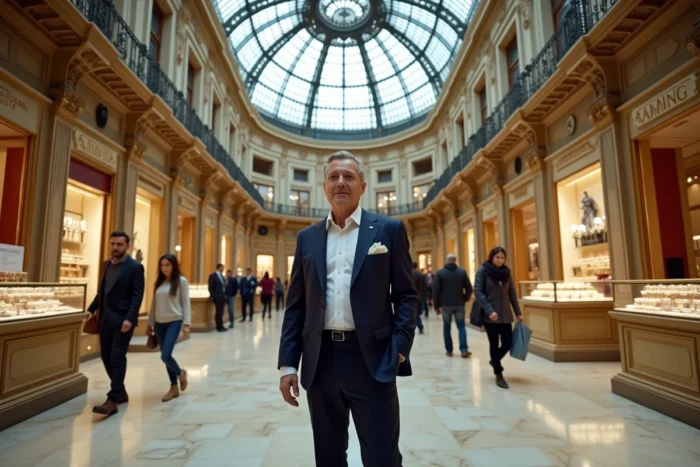
In Paris, the same mechanism is observed with ephemeral corners and collaborations between stores and young designers. La Galerie Vivienne, in a more intimate setting, offers an alternative model where independent boutiques coexist under a historic glass roof, without the advertising agency logic of department stores.
The luxury department store remains a place where one enters to discover what a professional buyer has deemed worthy of being shown. This editorial function, applied to physical commerce, constitutes its raison d’être in the face of online commerce, where the offering is by nature unlimited and unfiltered.