When you open your wardrobe on a September morning and half of the pieces seem disconnected from what you see in the window, the problem is not the budget. It’s the gap between what you wear and the direction current fashion is taking. Fashion trends move quickly, but some underlying movements are reshaping the way we dress, shop, and create a personal style in a lasting way.
Environmental penalty on fast fashion: what is changing in stores
Since September 1, 2026, an environmental contribution per item applies to ultra-fast fashion platforms like Shein and Temu. We’re talking about an additional cost that varies from about €0.25 to €0.50 for underwear, and climbs between €9 and €12 for jeans or coats.
This mechanism could reach €19.50 per item by 2030, capped at 50% of the pre-tax price. For us, consumers, this means that the ultra-low price of fast fashion is no longer guaranteed. A €3 t-shirt will struggle to absorb a tax of several euros.
Starting January 1, 2027, the law also provides for a ban on advertising and promotion by influencers for these products, with fines that can reach €100,000. Regular analyses on these topics can be found in Scoopzilla’s fashion articles, which track the evolution of these regulations and their effects on the French market.
The direct consequence on the ground: mid-range brands regain a competitive advantage over disposable giants. When comparing a €25 pair of pants taxed at €35 and a sustainable pair at €45, the gap narrows enough to change purchasing decisions.
Second-hand and vintage clothing: the first reflex before buying new
Fashion now represents the leading category of products in the French second-hand market, ahead of electronics and furniture. The annual growth of second-hand is around 20%, while new clothing is progressing at a much more moderate pace.
On the ground, it is no longer a militant choice. It has become an economic reflex. Before buying a new jacket, we first look at what is available second-hand. Vintage pieces, in particular, allow for wearing cuts and materials that are no longer in current production.
Creating a mixed wardrobe of new and second-hand
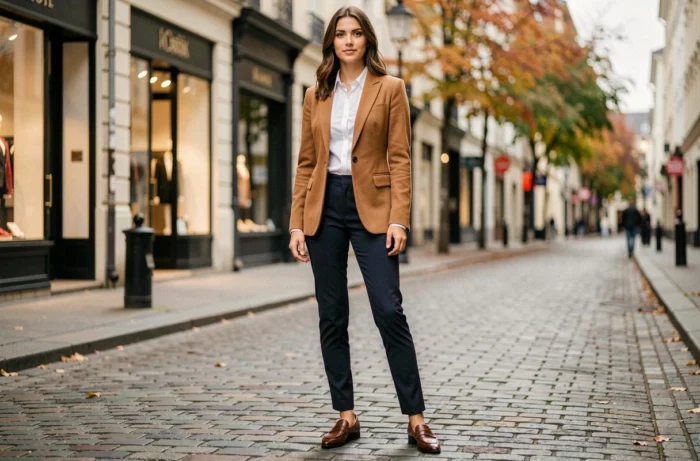
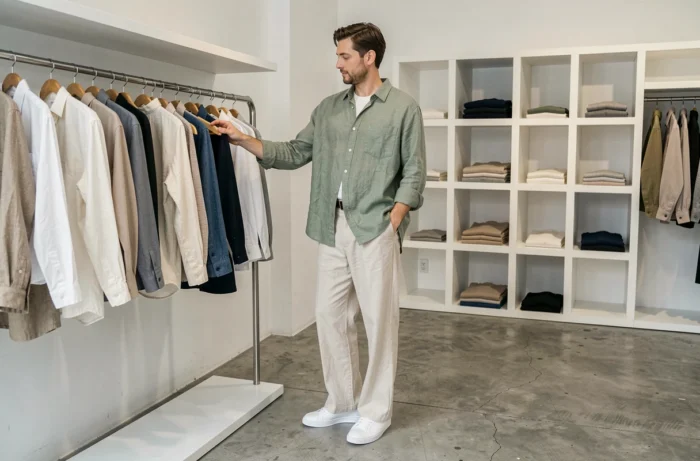
The trick that works best: reserve new items for well-fitted basics (a well-cut pair of jeans, a white t-shirt, walking shoes) and seek out statement pieces in vintage or second-hand. A structured dress from the 90s, an oversized blazer, a patinated leather bag add character without blowing the budget.
- Check seams and zippers before buying in thrift stores, especially on coats and structured jackets
- Favor natural materials (wool, thick cotton, linen) that age better than synthetic, even after several owners
- Cross-reference resale platforms with physical consignment shops, as prices and quality of sorting vary greatly from one channel to another
Returns vary on this point, but many fashion enthusiasts find designer pieces second-hand at a fraction of the original price, allowing access to a level of design that would otherwise be unattainable.
Fall 2026 style trends: what we keep and what we leave behind
Rather than listing all the trends spotted at Fashion Week, let’s focus on what translates to the streets and real wardrobes.
The bold mix and match
The mix and match trend, very visible at New York Fashion Week, consists of pairing pieces from different styles in the same outfit. Specifically: tailored pants with a technical sweatshirt, a pleated skirt with trail sneakers, a fine-knit top under a utility jacket.
This is not random. The principle relies on a coherent anchor point, often the color palette or overall silhouette. A common thread is maintained (neutral tones, oversized cuts) while mixing the origins of the garments.
Black boots as a structuring accessory
Among the accessories making a strong comeback, black boots are available this season in at least seven identified variations on the runways. On the ground, a pair of black square-toed or slightly pointed boots works with almost everything: midi dresses, straight jeans, long skirts.
The investment is worthwhile. Unlike a pair of fancy shoes worn for one season, well-maintained black boots last for several years and transcend trends.
Building a sustainable style without following every micro-trend
The pressure from social media pushes to constantly renew outfits. A new trend seems to emerge every week on certain platforms. The trap is to confuse inspiration with the obligation to buy.
A solid wardrobe relies on about twenty versatile pieces that can be combined with each other. Designers themselves, when observing their collections over the seasons, often return to the same basics: clean cuts, quality materials, easy-to-match colors.
- Identify three base colors that work well together (black-white-camel, navy-gray-cream, khaki-beige-rust) and build the wardrobe around these tones
- Limit impulsive purchases related to fleeting trends by asking if the piece will still be wearable in two years
- Invest in maintenance (appropriate washing, proper storage, cobbler) rather than systematic replacement
The current fashion design rewards those who know how to assemble rather than those who accumulate. An outfit made up of five well-chosen pieces, two or three of which are vintage, often yields a better result than a total look from the same rack.
The beauty of a well-thought-out wardrobe is that it absorbs trends without being subjected to them. You integrate a seasonal color through an accessory, test a new cut on a single piece, and the rest continues to work as is. Current fashion values coherence over constant novelty, and this is probably its most interesting direction in a long time.