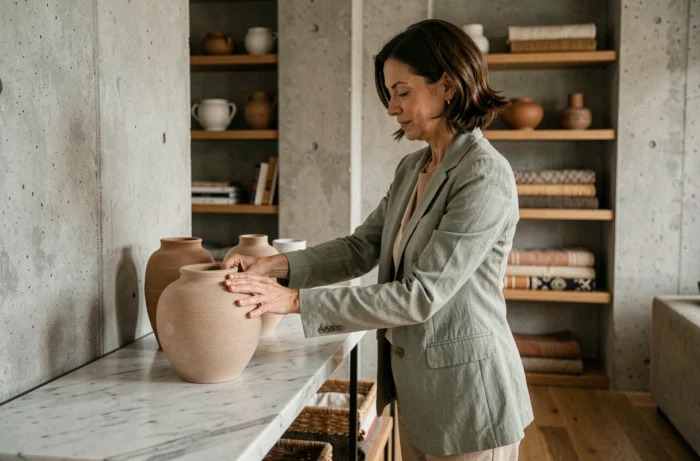
Interior decoration is going through a phase where uniformity is declining. Interiors designed like catalog pages are giving way to spaces that reflect a journey, accumulated tastes, and materials chosen for their texture as much as for their color. This trend, documented by several market analyses and purchasing behavior studies in 2026, is reshaping the way we approach room layout, from the living room to the most functional spaces.
Tactile materials and natural textures in interior decoration
The trend analyses for 2026 converge on one point: the demand for tactile finishes is significantly increasing. Linen, seagrass, Venetian plaster, raw wood, textured surfaces – the vocabulary of materials is expanding well beyond the wood/metal duo that dominated interiors in recent years.
This shift towards the tactile modifies concrete choices. A wall finished with lime plaster does not serve the same function as a wall painted in matte white, even if both are light. The former absorbs light differently, ages, and reacts to ambient humidity. The latter remains static.
This logic applies to furniture. A wrinkled linen sofa, an unvarnished solid wood coffee table, a rug made of plant fibers: these elements introduce a sensory diversity that smooth and uniform surfaces do not produce. The challenge is not to accumulate materials for pleasure, but to create contrasts that add depth to a space. Specialized resources like maisonartdeco.fr allow exploration of these associations between decorative styles and materials.
Personalized decoration: when the interior tells a story
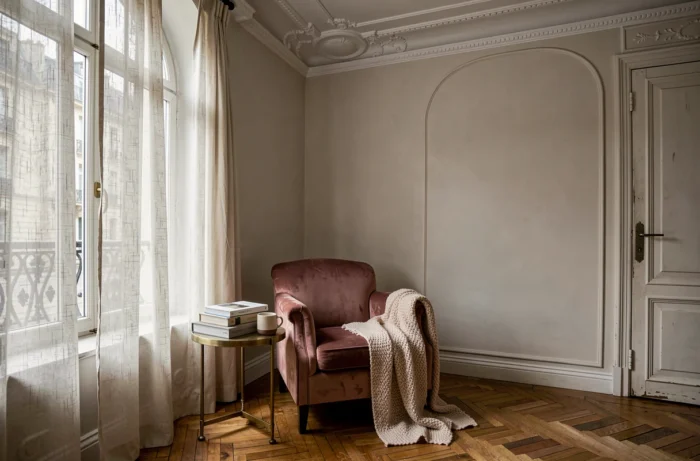
The term “personal story telling” appears in several recent sector summaries. The idea is simple: an elegant interior is built around collected objects, not just purchased ones. A ceramic piece brought back from a trip, a vintage furniture find, a framed engraving from years ago – these items follow no trend, and that is precisely what gives them value in a space.
Field feedback varies on the ease of executing this approach. Creating a coherent interior from disparate elements requires a sense of proportion and color that not everyone masters spontaneously. Two guidelines help:
- Maintain a limited color palette (maximum three dominant shades) to absorb the variety of objects without creating visual chaos
- Reserve one or two focal points per room, an object or piece of furniture that draws the eye, rather than dispersing attention across twenty decorative elements
- Embrace emptiness: a bare wall next to a loaded shelf creates a balance that systematic filling destroys
Personalization does not mean accumulation. The most successful spaces are often those that embrace empty areas.
Functional rooms and specialized spaces: decoration beyond the living room
The trend content for 2026 highlights an unexpected shift. Decoration is no longer limited to the living room or bedroom. Spaces like home offices, libraries, reading nooks, or wellness rooms are receiving as much decorative attention as reception areas.
This phenomenon is linked to the evolution of lifestyles. The rise of remote work has made the home office a permanent fixture. Decorating this space is no longer a gimmick: lighting, furniture choice, and wall colors directly influence daily comfort.
Colors and atmospheres by function
The room-by-room approach changes the relationship with colors. A workspace cannot support the same shades as a relaxation corner. The available data does not allow for absolute rules, but several sources note a return of expressive and contrasting colors, far from the all-beige palette that marked the previous decade.
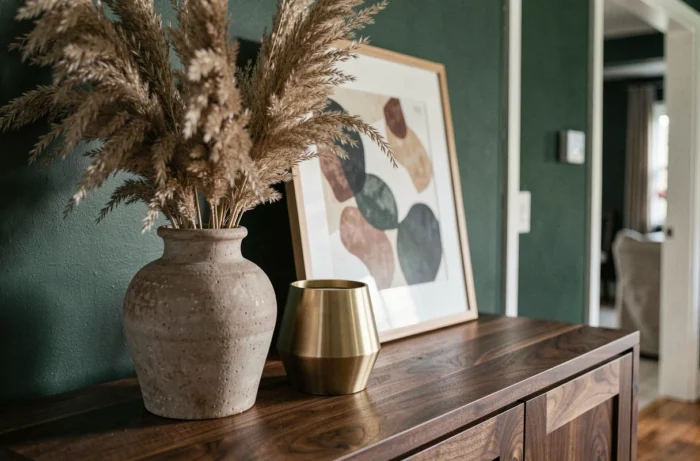
Earthy tones, deep greens, and ochres remain present, but they are now combined with brighter touches. An accent wall in teal in an office, a mustard cushion on a gray chair: these targeted contrasts are enough to change the atmosphere of a room without overwhelming it.
Sustainable decoration and responsible furniture choices
The elegance of an interior also depends on the sustainability of the choices made. Low-cost furniture replaced every two years creates an unstable and incoherent decor. In contrast, a quality piece of furniture ages and integrates better over time.
The vintage and second-hand furniture market contributes to this logic. Buying a well-preserved 1960s dresser often costs less than a new mid-range piece, with a more pronounced aesthetic result. The patina, period handles, and old wood species bring a uniqueness that no catalog can replicate.
Regulations are also evolving. The European Union has tightened formaldehyde emission limits for furniture under REACH (entry 77), with a deadline set for August 2026. This tightening pushes manufacturers towards less emitting materials, benefiting indoor air quality.
- Favor certified or labeled furniture for closed rooms (bedroom, office)
- Check the composition of particle boards for storage and libraries
- Consider second-hand furniture as both an aesthetic and less emitting alternative, as volatile compounds have largely off-gassed after a few years of use
The choice between new and second-hand has a direct impact on air quality, not just on style.
Building an elegant and personalized interior relies less on budget than on the coherence of decisions. A controlled color palette, varied yet harmonious materials, and furniture chosen to last: these three axes structure a space that gains character over time, rather than going out of style with the next season.