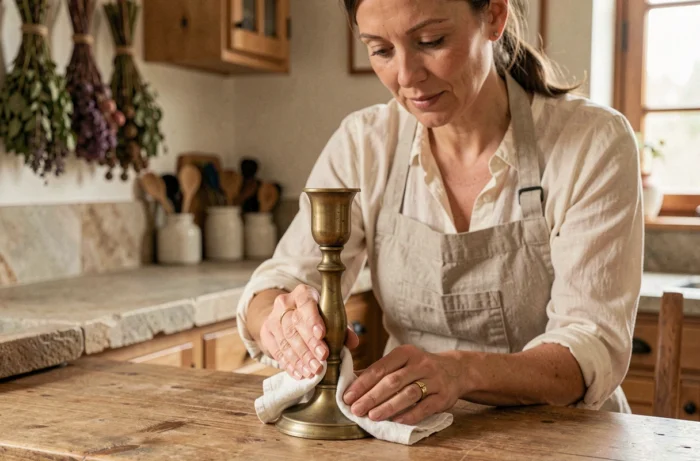
Brass tarnishes according to a mechanism that most cleaning guides treat uniformly, without distinguishing cases where an acidic intervention is relevant from those where it may worsen the problem. Before hosting guests, the temptation is strong to quickly rub with vinegar or lemon. However, the nature of the object’s finish, whether varnished or raw, determines the entire course of action.
Varnished brass or raw brass: the diagnosis that conditions all cleaning
An object made of brass covered with a protective varnish does not react at all like bare brass. Applying an acidic mixture (white vinegar, lemon juice, ketchup) on a varnished surface attacks the lacquer before even reaching the oxidation underneath. The result is an uneven, patchy finish, much harder to recover than the initial tarnishing.
To identify the finish, rub a soft cloth soaked in a bit of copper polish on a hidden area. If the cloth remains clean, the brass is varnished. If it gets colored, the surface is raw and acidic treatments become feasible.
On varnished brass, only soapy water is suitable. A little mild soap diluted in warm water, a non-abrasive sponge, a rinse with clear water, and immediate drying with a microfiber cloth are enough to remove dust and fingerprints without compromising the protective layer. This approach preserves shine in the long term, where chemical stripping would require re-varnishing the object.
If you’re looking for decorating tips on Déco en Vogue, you’ll find useful additional information on the subject.
Cleaning raw brass: prioritizing methods by level of aggression
The articles available online often present five or six homemade recipes on the same level, as if they were interchangeable. They are not. The most reliable approach is to start with the gentlest method and increase intensity only if the result remains insufficient.
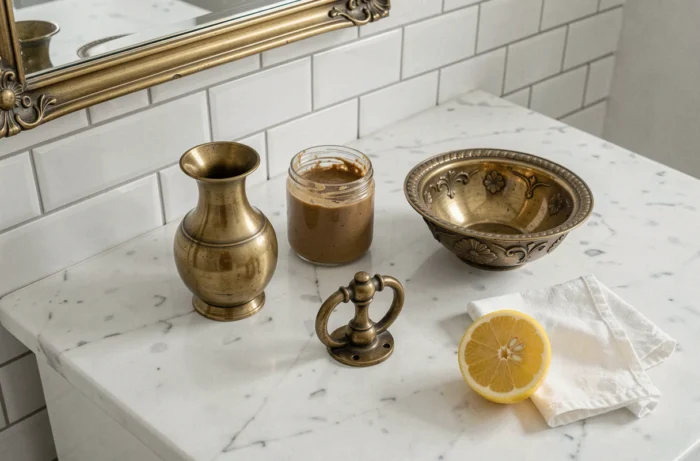
Regular maintenance: soap and cloth
For slightly tarnished brass, cleaning with warm soapy water (Marseille soap or diluted black soap) removes the superficial veil. The action is as important as the product: rub in regular circular motions, rinse under a stream of clear water, then dry immediately. Letting it air dry causes streaks that require starting over.
Moderate oxidation: baking soda paste
When tarnishing resists soap, a paste of baking soda mixed with a few drops of water forms a very fine abrasive. It is applied with a soft cloth, left to act for a few minutes, then rinsed thoroughly. Baking soda is alkaline, not acidic: it acts through mechanical micro-abrasion rather than chemical reaction, which limits the risk of pitting on the alloy.
Severe oxidation: white vinegar and coarse salt
Acidic mixtures (white vinegar combined with coarse salt, or lemon juice with fine salt) are reserved for cases where verdigris is visible. Their effectiveness is real, but the application time should not exceed twenty minutes. Beyond that, the acid begins to attack the copper and zinc in the alloy, which can create irreversible dulling. A thorough rinse and immediate drying are imperative.
This three-tier hierarchy avoids bringing out the chemical artillery for a simple veil of oxidized dust and protects the surface over time.
Protecting brass after cleaning: wax or varnish
Cleaning without protection means starting the work over again a few weeks later. Once the shine is restored, two options are available:
- Beeswax or microcrystalline wax, applied in a thin layer with a soft cloth, forms a hydrophobic barrier that slows oxidation. It is easily renewed and suitable for regularly handled objects (door handles, candlesticks).
- A spray varnish (such as clear metal varnish) offers more durable protection but fixes the patina. It is better suited for lighting fixtures or decorative elements that are not touched.
- On pieces exposed to moisture (bathroom, kitchen), wax alone is not sufficient in the long term: a marine varnish or clear polyurethane varnish withstands water splashes better.
In all cases, the surface must be perfectly dry and degreased before application. A residue of cleaning product trapped under the protective layer will accelerate oxidation instead of slowing it down.
Old brass and plumbing: a health warning often ignored
Cleaning guides focus on aesthetic aspects, but faucets and fittings made of brass before recent standards may contain a significant proportion of lead in the alloy. This lead is likely to migrate into drinking water, especially when water stagnates in the pipes for several hours.
Cleaning an old brass faucet to put it back into service without checking its composition exposes you to a real health risk. Old brass may contain lead that migrates into water. If you are restoring vintage plumbing, have the water analyzed downstream of the faucet or replace the parts in direct contact with drinking water with models that comply with current standards.

Common mistakes that damage brass instead of reviving it
Some common reflexes deserve correction before embarking on last-minute cleaning:
- Using an abrasive sponge or scouring pad. Brass is a soft alloy: the slightest scratch is permanent and visible under raking light.
- Mixing vinegar and baking soda thinking to add their effects. The acid-base reaction neutralizes both products. The mixture foams, but its cleaning power is lower than that of each component used separately.
- Air drying after rinsing. Limescale water marks set in a few minutes and create a whitish veil on the freshly cleaned surface.
- Applying toothpaste to polished mirror brass. Toothpaste contains micro-abrasives calibrated for dental enamel, not for a metal alloy. On a very smooth finish, it leaves a network of micro-scratches visible in the light.
A successful cleaning depends as much on choosing the right product as on respecting the application time and immediate drying. Identifying the nature of the finish first remains the most cost-effective gesture before your guests arrive.